Faroe Islands Travel Guide: The Most Dramatic Landscape You’ve Never Visited
The first time I pulled up a photo of Sørvágsvatn — that famous lake that appears to float suspended above the Atlantic Ocean — I honestly thought someone had edited it. The cliffs, the grey water below, the lake hanging impossibly at the edge. No filter. No trick. That's just what the Faroe Islands look like. I booked flights within the week, slightly suspicious it wouldn't live up to the hype. It did. Completely. Eighteen islands strung between Norway and Iceland, with a combined population smaller than a mid-sized American suburb, the Faroes deliver a landscape so operatically dramatic you'll spend most of your first day there unable to form sentences. Fog rolls in off the North Atlantic, then shreds itself against a cliff face in about four minutes. Then the sun appears. Then it rains sideways. Then it's sunny again. The Faroe Islands weather is not something you wait out — it's something you wear.
This Faroe Islands travel guide covers everything you actually need before landing at Vágar Airport: how to get there, where to sleep (beyond the obvious picks), which hikes deliver the best return on blistered feet, where to shoot for that Faroe Islands photography moment worth framing, and how to eat well without accidentally ordering fermented sheep. I've tried to be precise — specific hotels, named trails, real prices where I have them, and honest warnings where the guidebooks stay politely vague. The Faroes aren't hard to visit. They're just spectacularly under-visited, and it'd be a shame if that changed without you going first.
How to Get to Faroe Islands Without Losing Your Mind
Getting here used to require a lot of Copenhagen stopovers and resigned sighing. In 2026 it's genuinely easier. Atlantic Airways — the national carrier — flies direct from London Gatwick (twice weekly, May 26 through August 29), Edinburgh (March through December), Paris CDG (Mondays and Fridays, with Wednesdays added from May 27 to September 2), and Copenhagen year-round. From North America, your cleanest route is Icelandair to Reykjavík, then a 90-minute hop to Vágar. The whole journey from New York or Boston via Keflavík runs roughly 9-11 hours total if you time the connections right — not bad. Roundtrip economy from London typically runs £280–£420 depending on how far out you book. From Copenhagen it's cheaper; from New York expect $650–$900 roundtrip in shoulder season. Vágar Airport (FAE) is the only one on the islands, on the island of Vágar, about 45 minutes from Tórshavn by road. Rent a car. Seriously. Public buses exist, but the schedule will slow you down, and half the places you want to reach are at the end of a single-track road with nothing nearby.
When to Go and What the Faroe Islands Weather Will Actually Do
June is the sweet spot. Least rainfall of any month, long daylight hours (the sun barely sets from May through July, so you'll get light until midnight), and puffins still nesting on the cliff ledges if you're lucky. July and August are warmer — peak temperature tops out around 15°C (59°F), which the Faroese consider a heatwave — but that's also when crowds spike, relatively speaking. "Crowds" here means maybe 15 people at the Múlafossur viewpoint instead of three. September is underrated: most tourists have left, the heather turns gold and rust, and you'll get the islands largely to yourself. Avoid October and November unless you're chasing dramatic storm light for photography, in which case November is astonishing and brutal in equal measure. Whatever month you choose, pack for four seasons in a day. A Fjällräven Kånken Totepack for daily use, a Helly Hansen Loke waterproof jacket (or comparable), and Salomon X Ultra 4 hiking boots — waterproof, obviously. Umbrellas are useless here. The wind will turn them inside out within seconds.
Where to Stay: Hotels, Guesthouses, and the Good Airbnbs
Hotel Føroyar is the flagship property — a four-star hotel perched on the hillside above Tórshavn with sweeping fjord views, a full spa, and a restaurant that takes Faroese ingredients seriously. Doubles start around DKK 1,500–2,200 (roughly $215–$315) per night in summer. Worth it if you want comfort as your base.
Havgrím Seaside Hotel 1948 is the one I'd pick over Føroyar for character. It's a boutique property set in a 1948 historic villa right along the shore at Úti við Strond, ten minutes on foot from old town Tórshavn, with harbor views over to the island of Nolsøy. About 20 rooms. Genuinely lovely breakfast. Book early because it sells out.
Hilton Garden Inn Faroe Islands in central Tórshavn is the reliable, no-surprises option — 130 rooms, decent restaurant, free parking, and the best price-to-quality ratio of the three. Good base for families or anyone who needs predictability.
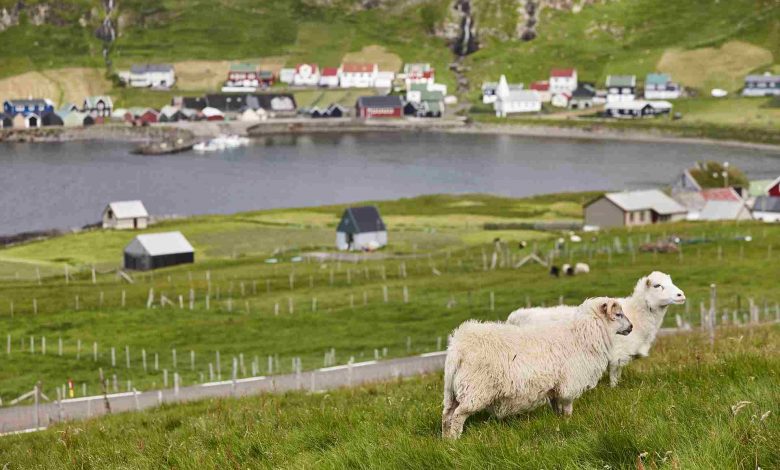
Outside Tórshavn: Gjáargardur Guesthouse in the village of Gjógv is the one you'll see on every Faroe Islands photography mood board. It's a family-run property in one of the most photogenic spots on the islands — a gorge-side village on the north tip of Eysturoy, with ocean views from almost every window. Simple rooms, hearty breakfast, no pretension. For Airbnb, search for the turf-roof cottages near Sørvágur — a few hosts rent traditional grass-roofed houses that run $90–$140 a night and feel like nowhere else on earth. The View in Bøur and the Hósvík Boathouse in Hósvík are two Airbnb-style properties consistently rated near 5 stars.
The Hikes Worth Earning
Faroe Islands hiking is the main event. Four routes in particular earn their reputation.
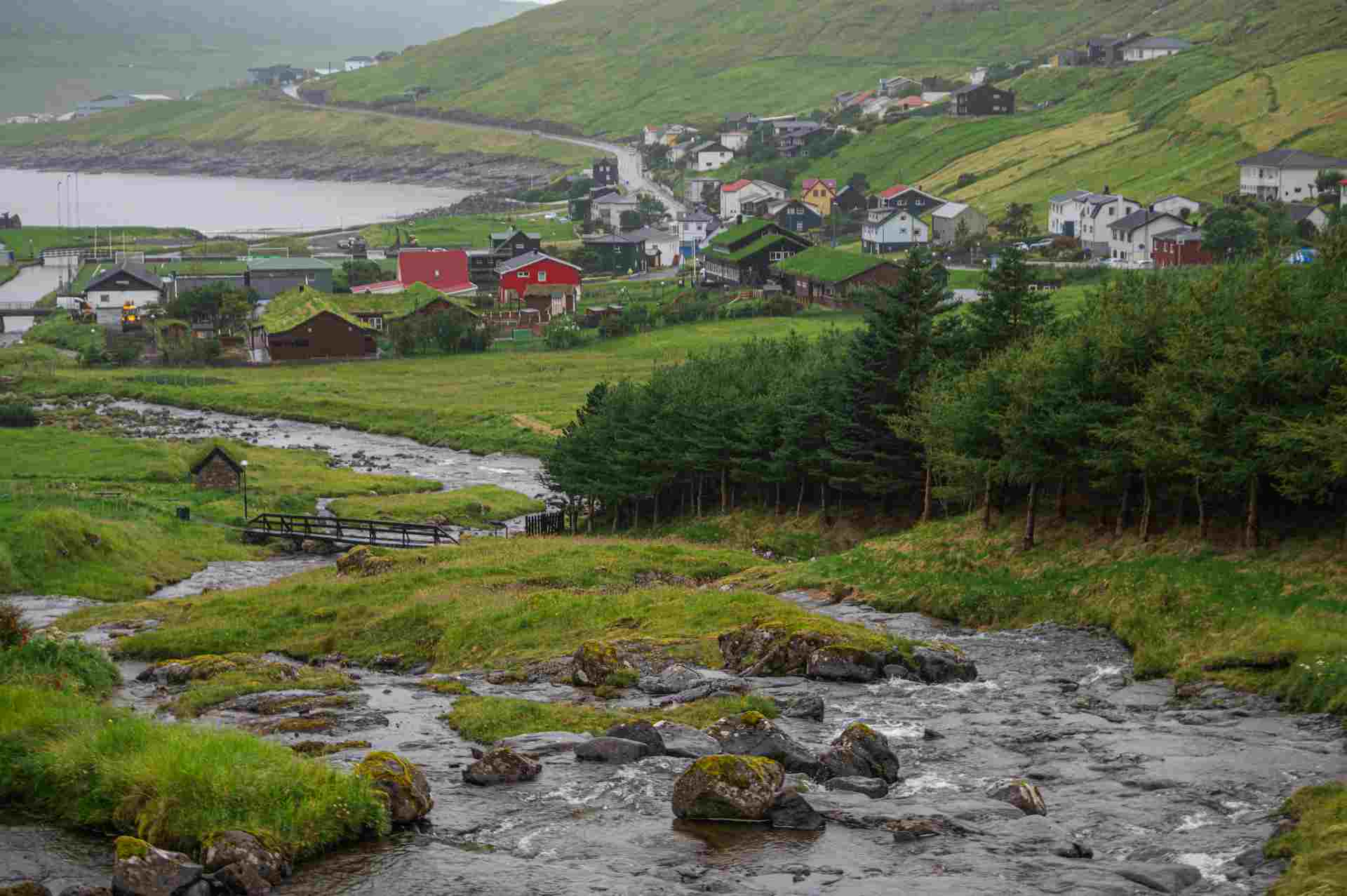
The Saksun to Tjørnuvík trail on Streymoy is the one locals recommend to people who ask what the best walk is. You start in the remote turf-roofed village of Saksun — itself already worth the drive — and hike over the mountain ridgeline down to the beach at Tjørnuvík, with its famous sea stacks called Risin and Kellingin standing offshore. About 12km round trip, moderate difficulty, allow four to five hours.
Trælanípa and Bøsdalafossur on Vágoy is the hike to the Sørvágsvatn optical illusion. Easy trail, well-marked, takes maybe two hours at a gentle pace. The payoff — standing on the cliff edge with the lake apparently floating 100 meters above the sea below you — is one of those moments where you take 47 photos and none of them capture it properly.
Trøllkonufingur (Troll Woman's Finger) near Sandavágur is a 313-meter sea stack rising from the ocean just off the southeast coast of Vágar. The trail to the viewpoint is a flat 3km out-and-back. Takes about 90 minutes. On a clear day, with that monolith silhouetted against clouds, it's extraordinary.
Drangarnir — two sea stacks off the coast of Vágar — requires a longer hike to reach the viewpoint, about four hours round trip. Pair it with a Múlafossur visit (the waterfall that drops straight off the cliff into the ocean at Gásadalur) on the same day and you've had a genuinely perfect day in the Faroes.
Faroe Islands Photography: The Shots You Came For
The Faroes are a photographer's destination in a way few places genuinely are, not because of golden hour alone but because the light here does things. Fog and sun interact over the fjords in ways that change minute by minute. A few practical notes.
Sørvágsvatn — shoot from Trælanípa cliff at anything other than high sun. Morning or late afternoon adds depth. Golden hour in summer is around 10–11 PM, which is surreal.
Múlafossur Waterfall at Gásadalur is best in windy conditions when the falls spray sideways. Not joking. Pack a lens cloth.
Saksun village at dawn. You'll be alone, the lagoon will be mirror-flat, and the grass-roofed church will glow. One of my favorite images from any trip I've taken in Europe came from 6 AM at Saksun with nobody else around.
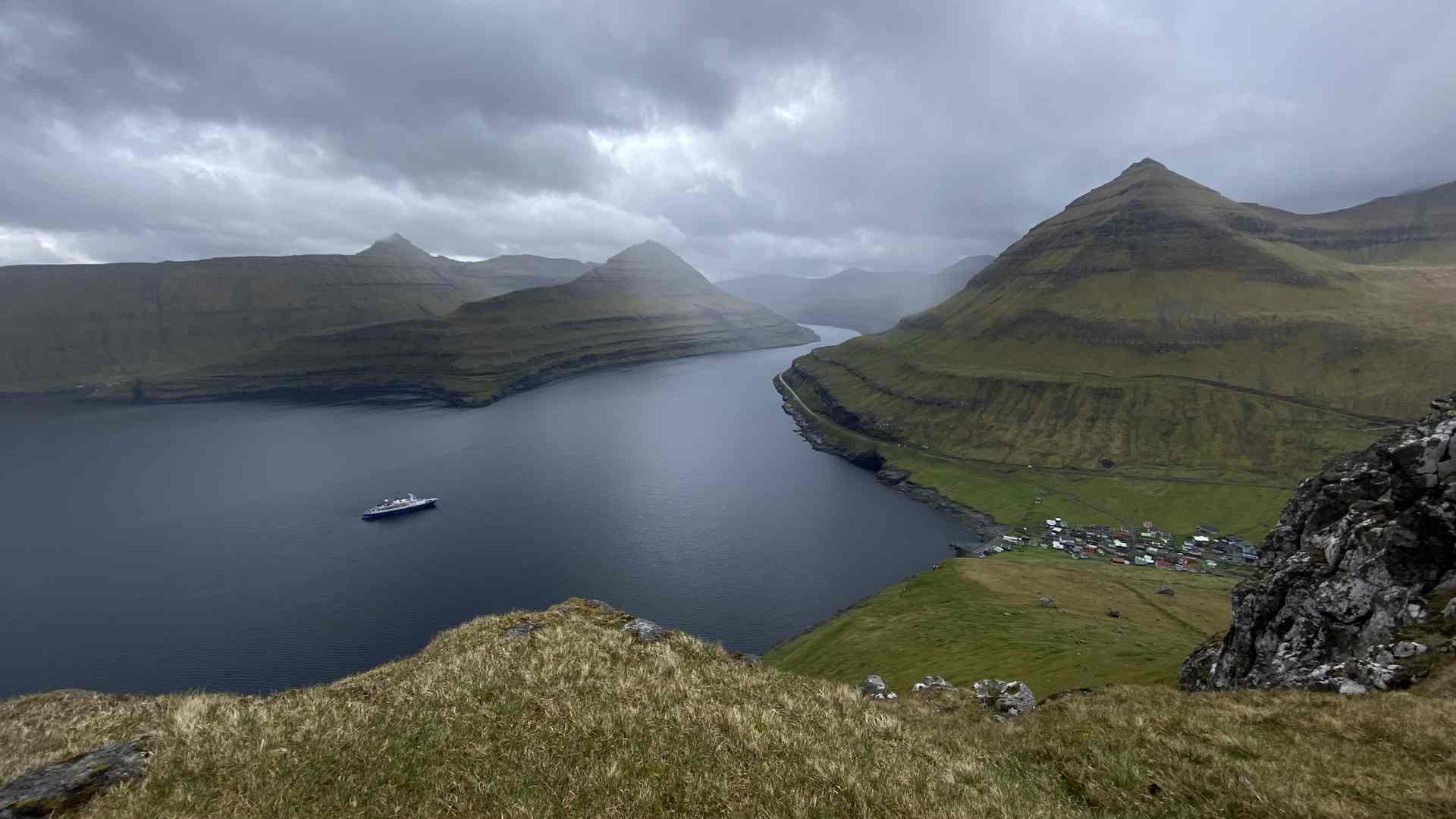
Gjógv gorge at any time of day — the natural harbor carved into the cliffs is extraordinary from above. Gjáargardur Guesthouse guests can walk to it in three minutes.
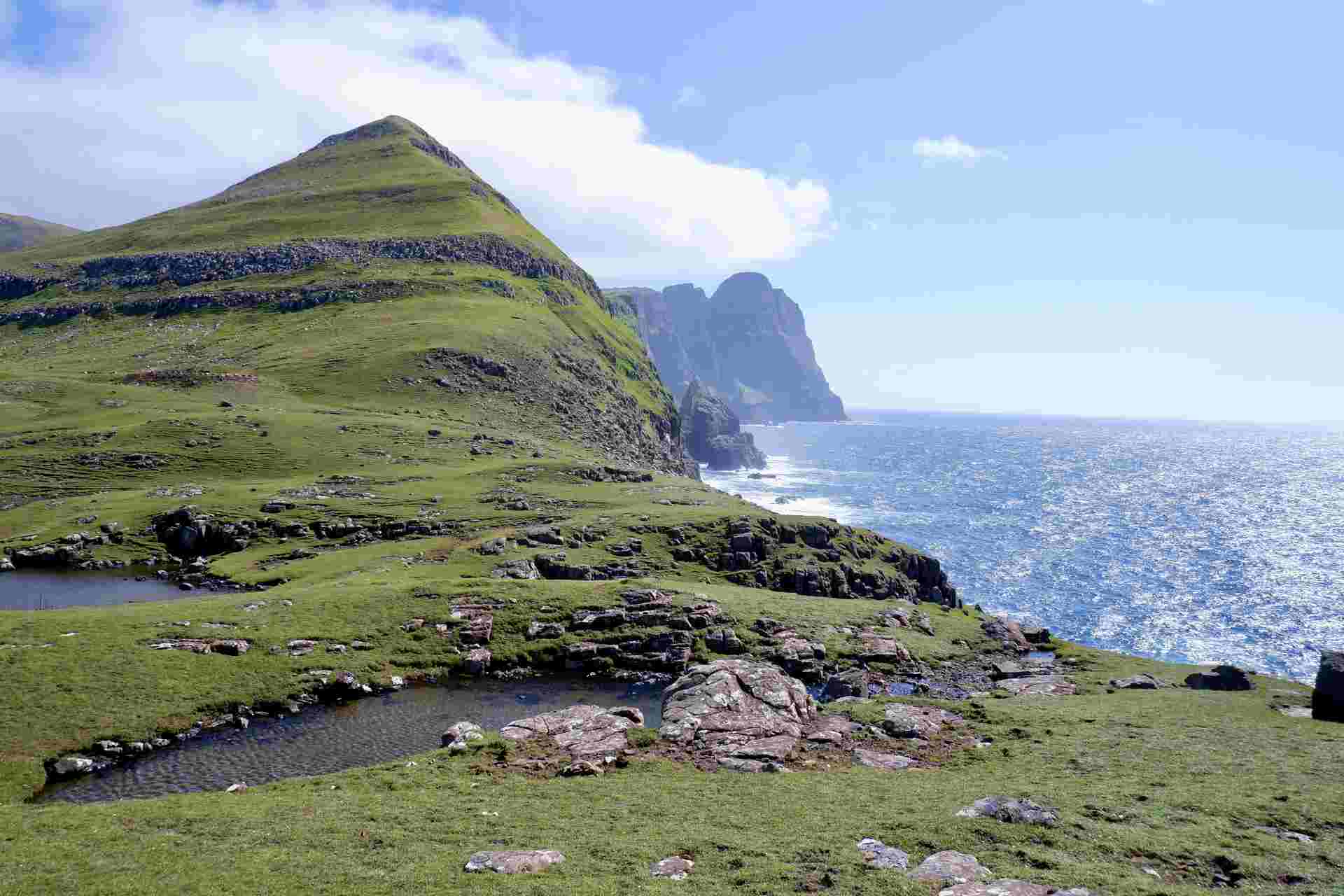
For gear: bring a circular polarizer for water shots, a wide-angle lens (16–35mm range), and a GorillaPod or travel tripod because the wind will defeat full-size tripods on exposed ridgelines. A peak Design Travel Tripod is worth the bulk on a photography trip here. Your phone's stabilizer will fail you on the cliffs.
Eating and Drinking in Tórshavn
KOKS has the reputation — Faroese New Nordic tasting menus, hyper-local ingredients, international recognition, the works. Expensive ($200+ per person for the full experience) and advance booking is essential months out. If that's your thing, do it.
For something more grounded: Áarstova in old town Tórshavn is a restored wooden house serving traditional lamb dishes and local catch in a room that feels like it hasn't changed in 80 years. Main courses around DKK 200–280 ($28–$40). Barbara Fish House, near the harbor, does straightforward Faroese seafood — cod, haddock, salmon — without pretense. Raest specializes in fermented meat and fish, the traditional Faroese preservation method. The smell is confronting. The taste, once you get past the challenge, is complex and genuinely interesting.
Don't leave without trying skerpikjøt — wind-dried mutton that's been hanging in a hjallur (wooden drying shed) for months. It tastes nothing like anything you've eaten before. Good or bad depends entirely on you.
Do's and Don'ts for the Faroe Islands
| Do's | Don'ts |
|---|---|
| Rent a car — public transport won't get you to most viewpoints | Drive on unpaved mountain roads without checking conditions first |
| Book Hotel Havgrím or Gjáargardur well in advance for summer | Assume you can walk-in anywhere in peak season (June–August) |
| Pack a Helly Hansen or Patagonia waterproof jacket — hard waterproof, not water resistant | Rely on an umbrella — the wind will destroy it within minutes |
| Download offline maps (Maps.me or Gaia GPS) before hiking | Hike without telling someone your route — mobile signal drops in valleys |
| Check the official Faroese hiking trail website (visitfaroeislands.com) for trail closures | Attempt Drangarnir or Saksun-Tjørnuvík in severe wind warnings |
| Bring a spare memory card — you'll shoot 500 photos a day easily | Miss Saksun village at dawn — it's the shot most people skip for sleeping in |
| Try the fermented lamb (skerpikjøt) at Áarstova — at least once | Order the most expensive tasting menu at KOKS without booking 3 months ahead |
| Carry DKK (Danish krone) for smaller cafés and guesthouses | Assume everywhere takes credit cards — some guesthouses are cash only |
| Visit Trælanípa in both morning and afternoon — the light changes completely | Speed through on a 3-day trip — you need at least 5 days to see more than Tórshavn |
| Bring Salomon or Merrell waterproof hiking boots — the terrain demands them | Wear trail runners on wet, steep ridgelines — the basalt gets slippery |
| Pack a power bank (Anker 20,000mAh recommended) — battery drains fast in cold air | Leave electronics exposed on cliff walks — spray and wind damage cameras |
FAQs
How many days do you need in the Faroe Islands?
Five days is the practical minimum if you want to see more than Tórshavn and one or two hikes. Seven to ten days lets you explore the outer islands — Suðuroy in the south, Viðoy in the north — and gives you buffer for weather delays, which are real. The Faroes reward slower travel. If you're there for Faroe Islands photography specifically, build in extra days; you'll spend at least one waiting for conditions.
Is the Faroe Islands expensive to visit?
More than Iceland, though not outrageously so. A mid-range hotel like Gjáargardur Guesthouse or Havgrím runs $150–$250 per night. Restaurant meals in Tórshavn average $25–$45 per main course. Car rental is roughly $80–$120 per day in peak summer. Budget travelers can keep costs down with Airbnb-style turf cottages ($90–$130/night) and cooking some meals. A realistic budget for two people for seven days, including flights from Europe, is around $3,000–$4,500 total.
What is the Faroe Islands weather actually like?
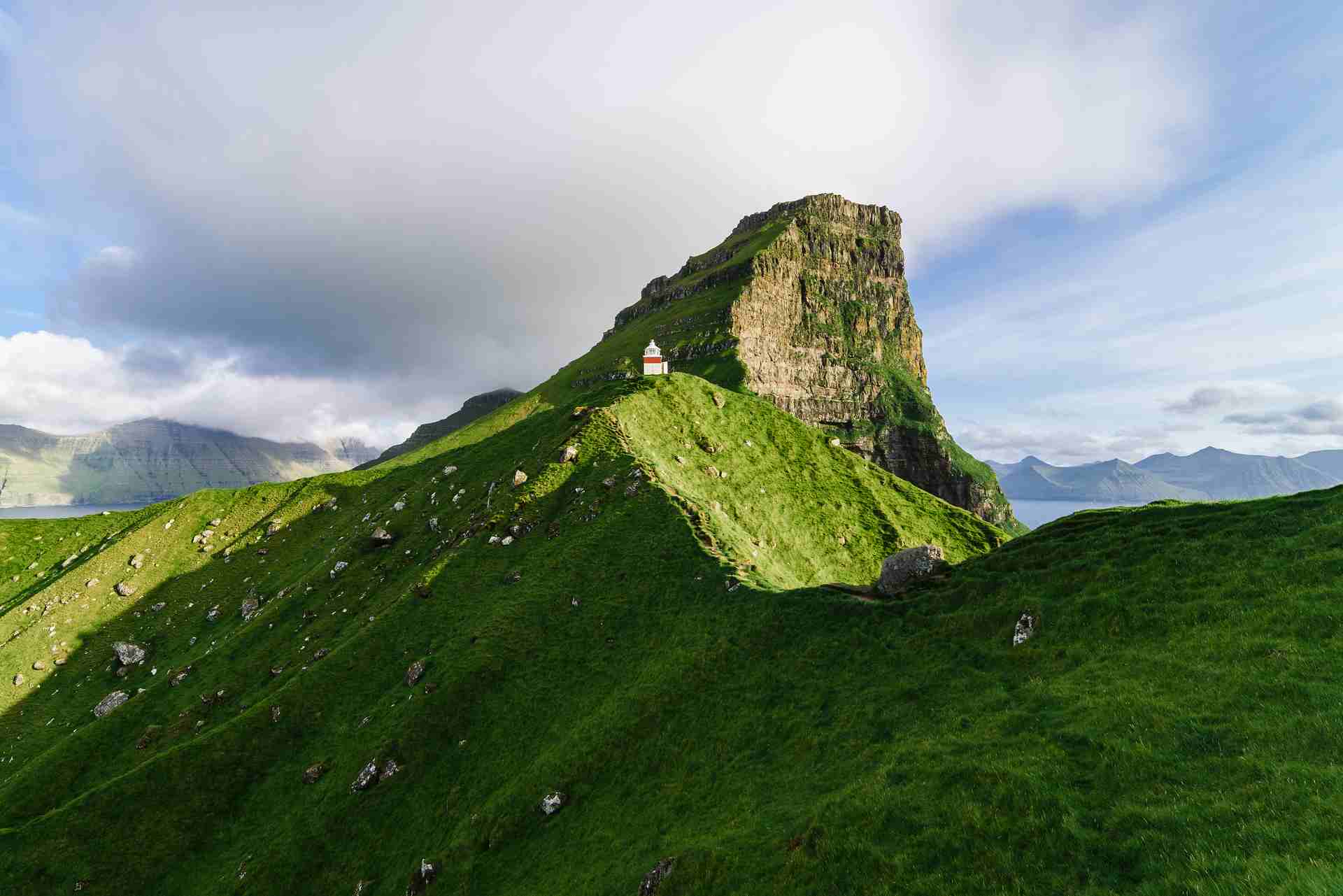
Unpredictable. That's the only honest answer. Average summer highs sit around 13–15°C (55–59°F), which feels warmer in sun and considerably colder in wind and rain. June gets the least rain statistically. October is the wettest month, averaging 187mm of rainfall with rain on 25 of 31 days. Year-round, expect four seasons in a single afternoon. The locals have a saying that if you don't like the weather, wait five minutes.
Do you need a visa to visit the Faroe Islands?
The Faroes are a self-governing territory of Denmark but are NOT part of the EU or the Schengen Area. However, they have bilateral agreements with most countries — US, UK, Australian, EU, and Canadian citizens can visit visa-free for up to 90 days. Check the current entry requirements at faroeislands.fo before booking.
What are the best hikes in the Faroe Islands for beginners?
The Trælanípa hike to the Sørvágsvatn optical illusion is easy and marked — about 5km round trip with minimal elevation. The Trøllkonufingur viewpoint trail near Sandavágur is a flat 3km out-and-back. Both are genuinely spectacular and accessible to anyone who can walk a couple of hours without difficulty. Save Saksun-Tjørnuvík for a full day when you're feeling fit.
Is the Faroe Islands good for solo travel?
One of the better destinations for it, honestly. Crime is virtually nonexistent. Locals speak excellent English. The main logistical challenge is that car rental rates for solo travelers are the same as for two people, so costs are higher without someone to split with. Hostels are limited — the most reliable option in Tórshavn is the Tórshavn City Hostel — but Airbnb private rooms fill the gap decently.
Can you see the Northern Lights from the Faroe Islands?
Yes, between September and March when nights are dark enough. Visibility depends on cloud cover, which in the Faroes is considerable. Your best bet is to stay somewhere outside Tórshavn's light pollution — near Gjógv or Sørvágur — and watch the forecast through the Space Weather app. Don't make the Northern Lights the sole reason to go in winter; treat it as a bonus.
What should I photograph that most tourists miss?
The village of Tjørnuvík from the ridgeline above it — two Viking stone pillars (Risin and Kellingin) rising from the sea, the horseshoe bay below, and usually nobody else around. Also: the interior of a traditional hjallur drying shed if you can find a host willing to show you one. And Saksun at dawn, which I've already said twice, because it deserves to be said twice.