Best Cave Hotels and Underground Stays Around the World
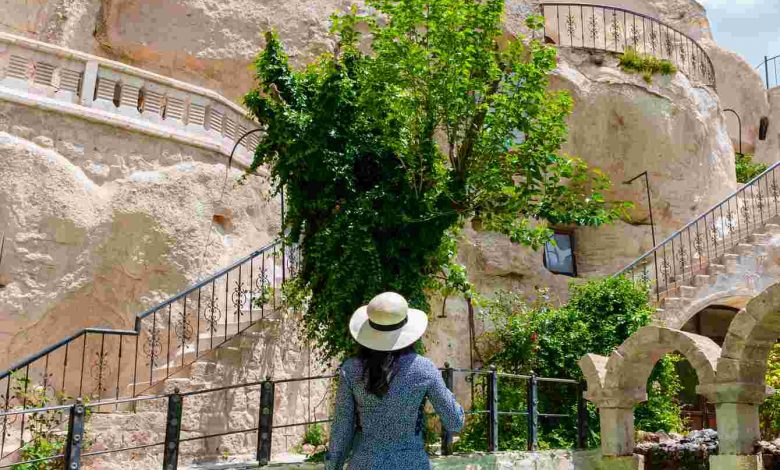
There's a specific kind of quiet you get inside a cave hotel that no sound-proofed city room can replicate. It's not just silence — it's the absence of the modern world's hum entirely. I first felt it at a small cave pension in Göreme, Turkey, where the walls were solid volcanic tuff, the temperature held at a steady 65°F no matter what the August sun was doing outside, and the only noise at 2 AM was the distant bark of a dog somewhere in the valley. I booked it mostly on a whim after my original hotel had a plumbing issue. Best accidental decision of that whole trip. Cave hotels have this way of making you feel like you've dropped off the grid, even when there's good Wi-Fi and a Turkish breakfast waiting downstairs. They've also come a long way from novelty listings on quirky travel sites — some of the world's most celebrated properties now happen to be carved into rock faces, ancient tufa cliffs, or volcanic hillsides.
This guide covers the cave hotels that genuinely justify the hype — and some that don't get nearly enough. I've pulled current 2026 pricing, included the properties most travelers keep circling back to, and flagged where the value makes sense versus where you're paying a premium for a name. Cappadocia dominates any list like this for good reason, but Santorini, southern Italy, and — oddly — Arkansas all have serious contenders. If you've been looking at cave accommodation and wondering which ones are the real deal, here's my honest take.
Museum Hotel Cappadocia: The Standard All Others Get Measured Against
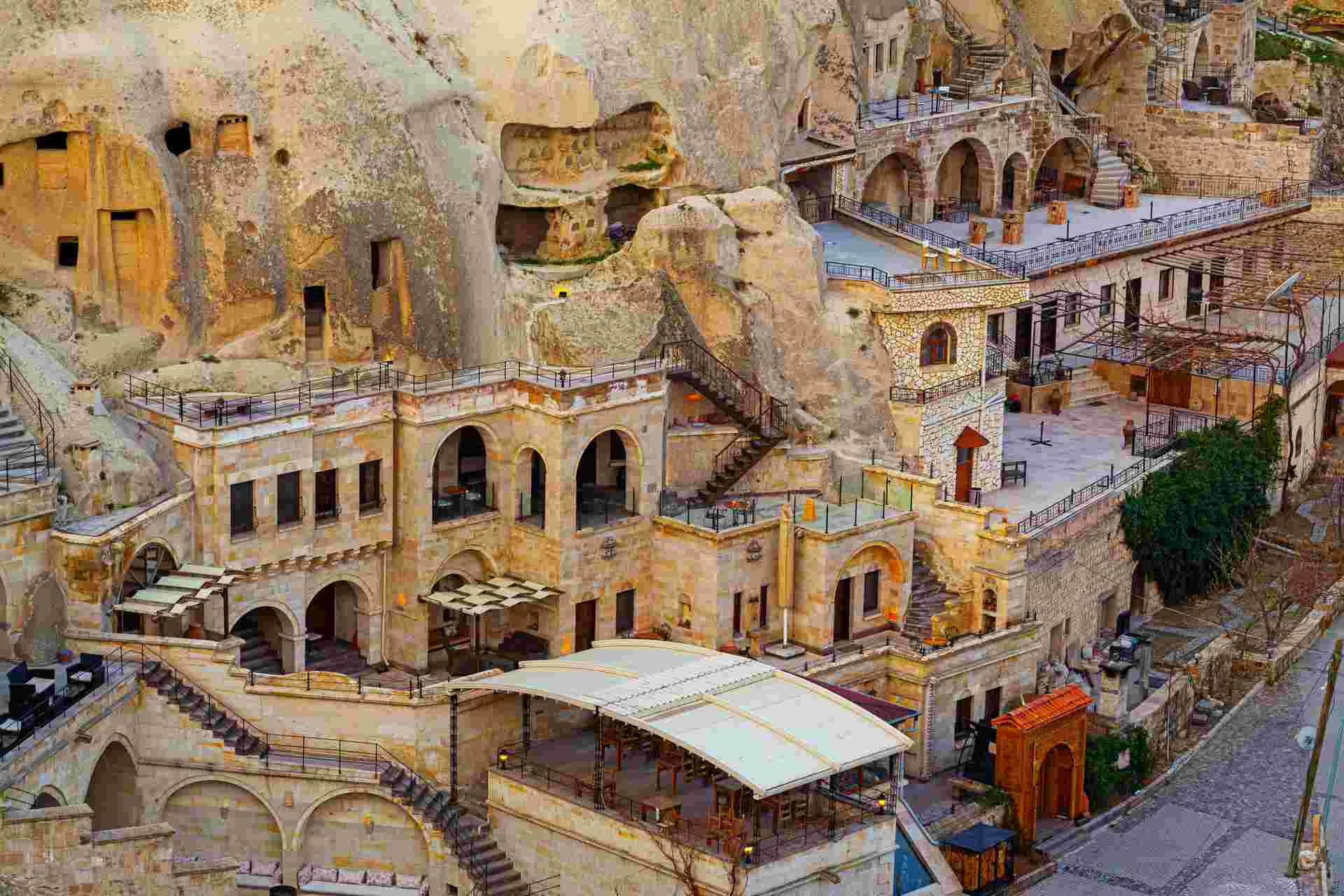
Museum Hotel in Uçhisar is Cappadocia's only Relais & Châteaux property, and it earns that designation without trying too hard. Thirty-four rooms and suites are carved into a 2,000-year-old volcanic rock formation — the oldest parts of the property date back to Byzantine times — and the place is stuffed with genuine antiques, not reproduction pieces bought to look old. Kilims, Ottoman manuscripts, Anatolian ceramics. It feels more like a private collector's home than a hotel. Rooms start around $166 per night for the entry-level cave rooms, climbing significantly for the Lale Suite, which has its own terrace with panoramic valley views and a private hot tub. The breakfast is proper — regional cheeses, fresh simit, local honey, eggs cooked to order. The cave hotel concept exists in purer form at cheaper properties in Göreme, but if you want the polished version with serious service, Museum Hotel is the benchmark.
Yunak Evleri Cappadocia: The More Accessible Cave Hotel
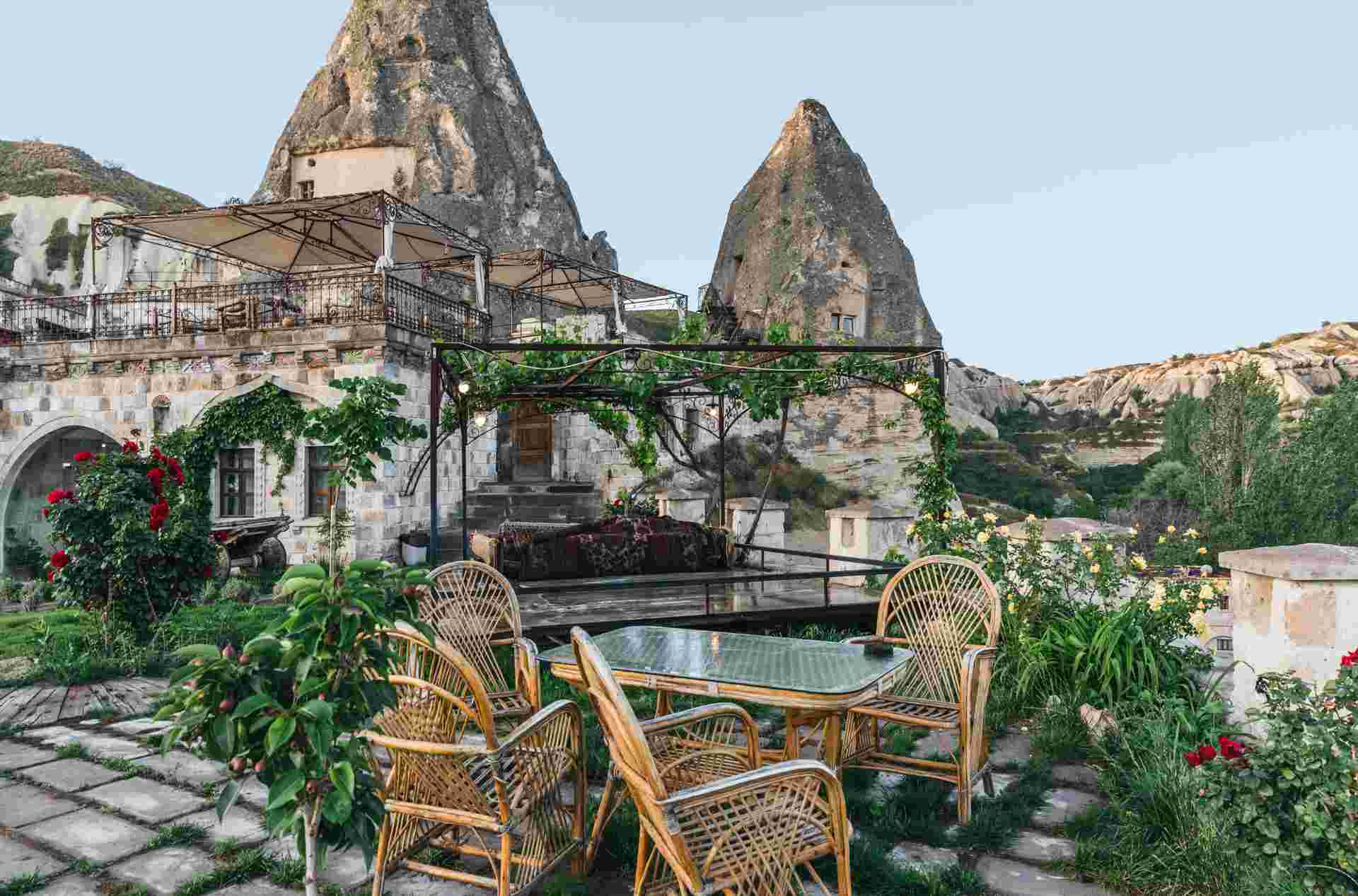
Where Museum Hotel plays it exclusive, Yunak Evleri in Ürgüp plays it broad — 120 rooms spread across six interconnected cave houses carved into a cliff face. Classic rooms from around $134 per night. Forty suites, twenty deluxe rooms, sixty classic — so availability is rarely an issue, even in peak season (June through August is slammed across all of Cappadocia). The rooms vary wildly in character, which is part of the charm: some are single-chamber caves with arched stone ceilings, others run through two or three connected grottos with hardwood floors and Ottoman-style furniture. Book a deluxe if the budget allows — the classic rooms can feel snug. The two pool areas make it more family-friendly than most cave properties, and the staff genuinely know the area. They'll point you to the Derinkuyu underground city, the Ihlara Valley, the rock-cut churches in Göreme — without the hollow enthusiasm of someone reading off a brochure.
Mystique Santorini: Cave Rooms on a Caldera Cliff
Santorini's cave room aesthetic is architectural rather than geological — the white-washed cube structures with domed ceilings built into the caldera cliffs of Oia are technically man-made, but they replicate the cave feeling in a way that's become iconic. Mystique, a Luxury Collection Hotel, does this better than almost anyone on the island. Forty-one suites and villas, all with personal terraces, most with caldera views. The Holistic Villa has two cave-style bedrooms, a private infinity pool, and a jacuzzi. Rates start at $586 per night on KAYAK, though you'll find shoulder-season deals (October, or early April just before they close for winter) from around $437 per night including taxes. The hotel shuts from mid-November through early April — plan around that or you'll show up to a locked gate. The cave room design here isn't about geology, it's about that Cycladic aesthetic: thick curved walls, no sharp corners, cream plaster surfaces. It's deeply intentional. Completely worth it.
Sextantio Le Grotte della Civita: Ancient Caves in a UNESCO City
Matera, in Italy's Basilicata region, has been inhabited continuously for about 9,000 years. The Sassi — the ancient cave dwellings carved into two ravines — were Europe's largest inhabited cave complex until residents were forcibly relocated in the 1950s. UNESCO designated the city a World Heritage Site in 1993. Sextantio Le Grotte della Civita opened within the Sassi in 2009, converting 18 ancient caves and a cave church into a hotel that keeps almost everything original. No wallpaper over the rough stone walls. No fake antiques. Minimal lighting designed to replicate candlelight. Rooms range from the Grotta Classic (20–35m², around €153/night including breakfast) to the Grotta Executive Suite (110–130m², around €352/night). The breakfast alone justifies the price — mozzarella, local yoghurt, Basilicata bread, seasonal fruit, pastries. I've stayed in UNESCO areas before where the "heritage" vibe feels manufactured. This doesn't. The building is too unpolished, too genuinely old, too un-hotel-like in the best possible way. Skip the gift shops in the piazza — they're tourist traps. The hotel is the real experience.
Beckham Creek Cave Lodge, Arkansas: Four Bedrooms, One Enormous Cave
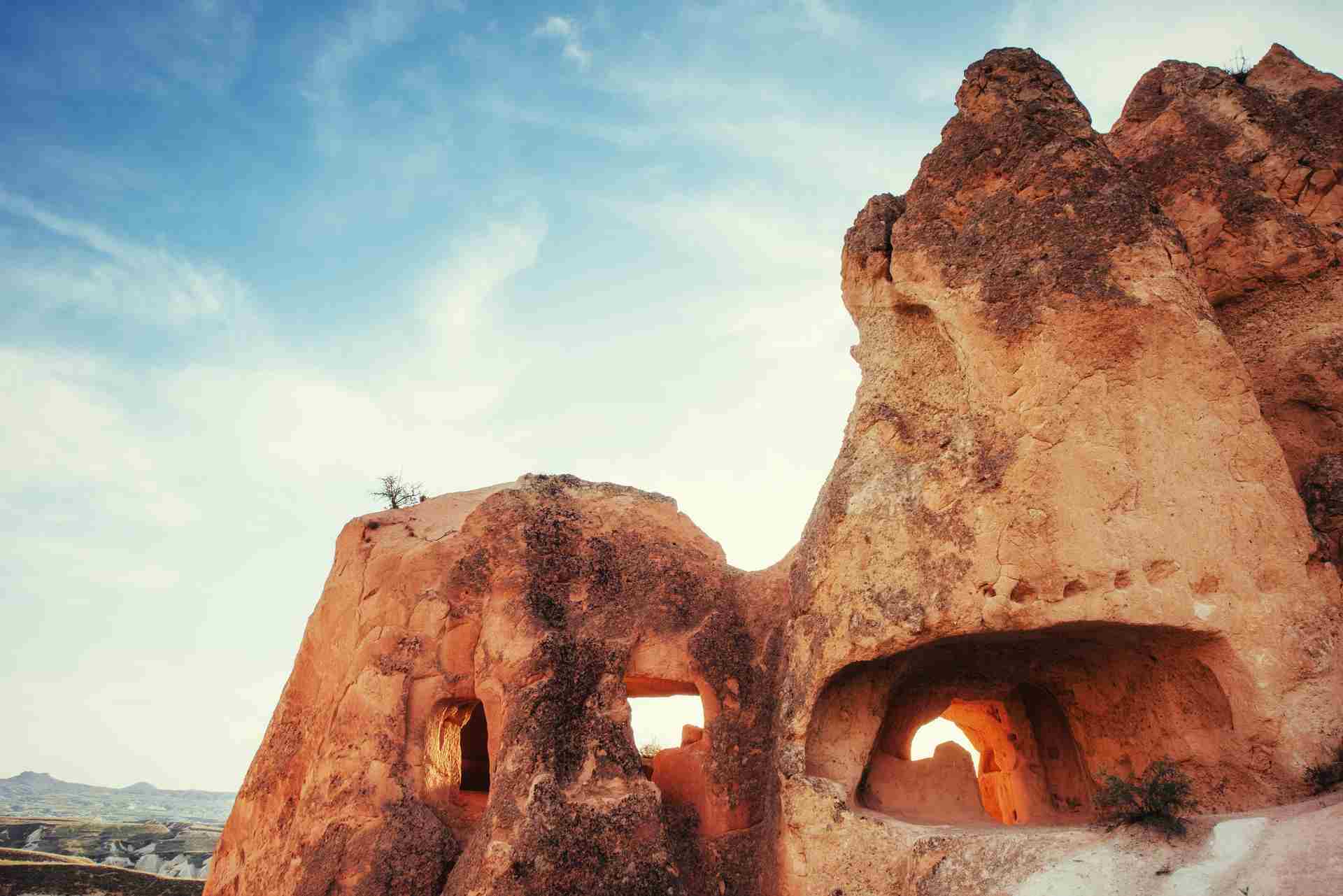
Nothing about the Arkansas Ozarks screams luxury cave hotel, which makes Beckham Creek Cave Lodge all the more surprising. The property sits on 256 acres near Parthenon, Arkansas — about three hours from Little Rock — and the lodge itself is built inside an actual natural cave. Four bedrooms, four bathrooms, a full kitchen, waterfall, hot tub, and a great room with a glass wall looking into the cave interior. The cave maintains a constant temperature of around 58°F inside the cave sections, so the lodge has heating for the living spaces. It sleeps up to eight guests and rents entirely as a private property at $2,200 per night — no other guests, no front desk, no shared anything. If you're splitting it among four couples, $550 per person per night for a 256-acre private cave estate is actually a reasonable proposition. Monday and Tuesday nights come at a 10% discount (code MonTues10 on their site). It's not for everyone — you need to bring groceries, you're deep in rural Ozarks, and the nearest decent dinner out is a drive. But as a group trip or a truly private retreat, there's nothing quite like it in the US.
What Makes a Good Cave Hotel Beyond the Instagram Photo
The cave novelty wears off by day two if the property hasn't thought past it. The best cave hotels solve the problems inherent to the format — low light, lack of windows, uneven surfaces, temperature management — and turn them into features rather than compromises. Museum Hotel uses the natural temperature stability as a selling point (Cappadocia summers hit 95°F; the caves stay cool without air conditioning working overtime). Sextantio leans into the dimness with lighting that actually creates atmosphere. Yunak Evleri uses the multi-chamber layouts to create suite configurations you can't replicate in a conventional room. The ones worth booking understand that a cave room is a different category of accommodation, not just a regular room with rocky walls. The ones to avoid are the ones that feel like regular hotels where someone replaced the drywall with concrete. If the stone looks painted or the ceiling feels fake, it probably is.
Booking Tips: When to Go, What to Skip
Cappadocia peaks in June–August and October. Hot air balloon flights (the main reason most people go) run almost year-round but are most reliable in April–May and September–October. Book at least three months ahead for Museum Hotel in peak season — it has only 34 rooms. Santorini is unavoidable in July–August, and Mystique will be at full rack rates. Go in late May or late September for the same weather at 20–30% less. Matera is genuinely less crowded than it deserves — September is warm, less busy than the Italian summer peak, and the evening light on the Sassi is extraordinary. Beckham Creek books out several months ahead for weekends; check mid-week windows if you're flexible. Always verify current rates directly with the hotel — cave properties sometimes offer better deals directly than through OTAs, and some include breakfast that's not factored into the comparison price.
Do's and Don'ts for Cave Hotels
| Do's | Don'ts |
|---|---|
| Book directly with the hotel — rates sometimes beat OTAs, especially at boutique cave properties | Don't assume cave rooms are always cold; most are climate-controlled or naturally temperate |
| Pack a small flashlight — cave corridors can have uneven stone steps with minimal lighting at night | Don't book the cheapest cave room category sight unseen; entry-level cave rooms can be tiny |
| Check the hotel's closure dates — Mystique Santorini shuts Nov–Apr, some others close in winter | Don't skip the breakfast at Sextantio — it's included and exceptional |
| Request a room with natural light if that's important to you — genuine caves often have none | Don't fly into Kayseri for Cappadocia without checking traffic to Ürgüp vs. Uçhisar; the drive matters |
| Split Beckham Creek Cave Lodge among multiple couples — $2,200/night divided by 8 guests changes the math | Don't book a cave hotel in Oia without checking if your preferred room has a caldera view |
| Ask about hot air balloon packages at Cappadocia cave hotels — many have in-house booking | Don't try to drive yourself in Matera's Sassi; the lanes were built for donkeys, not rental cars |
| Check for mid-week discounts at Beckham Creek (code MonTues10 saves 10%) | Don't over-pack — cave room storage can be genuinely limited, especially in historic properties |
| Visit the surrounding area at night — Cappadocia's fairy chimneys lit at dusk are worth the late dinner | Don't pay rack rate at Mystique in the shoulder season without checking KAYAK or Expedia for deals |
| Request a higher floor or terrace room at Yunak Evleri for views over Ürgüp valley | Don't confuse cave aesthetic (Santorini style) with actual carved-rock caves — different experiences |
| Budget for transport in remote cave hotel areas — Beckham Creek is 30+ miles from the nearest town | Don't book a Santorini cave room in late November hoping to still get in — most properties are closed |
FAQs
What is the most famous cave hotel in the world?
Museum Hotel Cappadocia in Uçhisar, Turkey, consistently ranks among the most recognized cave hotels globally. It's Cappadocia's only Relais & Châteaux member, operates within a 2,000-year-old volcanic rock formation, and houses 34 rooms furnished with genuine antiques and archaeological artifacts. The property opened in 2003 and has since become the benchmark against which other Cappadocia cave hotels are compared. Sextantio Le Grotte della Civita in Matera, Italy, gets similar recognition for its authentic conversion of 9,000-year-old UNESCO-protected cave dwellings.
How much do cave hotels cost per night?
Prices vary enormously. Budget cave rooms in Göreme, Cappadocia start around $60–80 per night in low season. Mid-range options like Yunak Evleri Cappadocia start around $134 per night. Luxury properties like Museum Hotel Cappadocia start around $166, while Mystique Santorini begins at approximately $437–586 per night depending on season. Sextantio in Matera ranges from roughly €153 (Grotta Classic) to €352 (Executive Suite) per night including breakfast. At the extreme end, Beckham Creek Cave Lodge in Arkansas is $2,200 per night as an exclusive-use property sleeping up to 8 guests.
Are cave hotels cold and uncomfortable?
Most aren't. Natural caves maintain a relatively stable temperature — typically between 55–65°F — regardless of outdoor conditions. In Cappadocia, this means the rooms are genuinely cool in scorching August heat and retain warmth in winter. Quality cave hotels supplement this with underfloor heating, heated towel rails, and good bedding. Beckham Creek Cave Lodge heats its living spaces to comfortable temperatures. The main adjustment is low natural light — genuine cave rooms often have no windows, relying on artificial lighting and design to compensate. Bring a reading light if you need bright task lighting.
Is a Santorini cave room the same as a Cappadocia cave hotel?
Not exactly, though both trade on the cave aesthetic. Santorini's iconic cave rooms — at places like Mystique — are architecturally cave-like: thick curved white plaster walls, domed ceilings, arched doorways built in the Cycladic style into the caldera cliffside. They're constructed to feel cave-like. Cappadocia's cave hotels like Museum Hotel and Yunak Evleri are literally carved into ancient volcanic tuff rock, with rooms cut directly into the stone. Both are extraordinary. They're just different in origin — one is an architectural tradition, the other is geology.
When is the best time to visit Cappadocia cave hotels?
April through May and September through October are the sweet spots. Temperatures are mild (60–75°F), hot air balloon flights run reliably, and crowds are significantly lower than peak summer. June through August is peak season — prices spike, tours sell out weeks in advance, and Cappadocia's famous Göreme valley can feel genuinely crowded by 10 AM. Winter (December–February) brings snow, which looks spectacular on the fairy chimneys and dramatically reduces prices, but some balloon operators ground flights for days at a time.
Can you stay underground at Beckham Creek Cave Lodge alone, or is it always group rental?
Beckham Creek Cave Lodge rents exclusively as a whole property — you can't book a single room. The entire four-bedroom, four-bathroom cave lodge at $2,200 per night is your private space for the duration of your stay. That includes the full cave grounds, the waterfall feature, the hot tub, and access to 256 acres of Ozark wilderness. For a solo traveler or couple, it's expensive. For a group of 6–8 splitting it, the math works out to $275–367 per person per night — which, for a fully private cave property in the Ozarks, is actually competitive with mid-tier cave hotel pricing in Cappadocia.
What should I pack for a cave hotel stay?
A few things that regular hotel stays don't require. A small portable flashlight or headlamp — cave corridors can be genuinely dark, especially at night, and stone steps are uneven. Slip-resistant footwear for wet stone floors (cave humidity can make surfaces slippery). Layers — while cave hotel common areas are heated or cooled, the stable rock temperature can feel cool in rooms that have minimal heat supplementation. Don't over-pack: storage space in historic cave conversions (Sextantio especially) can be limited. The rooms are beautiful but not designed around modern luggage.
Are cave hotels good for people with claustrophobia?
It depends on the cave hotel. Some cave rooms are genuinely small and enclosed — low ceilings, no windows, narrow doorways. Others are expansive multi-chamber suites with high vaulted ceilings. Yunak Evleri's suites, for instance, run through three connected grottos with ceiling heights exceeding 4 meters. Museum Hotel's upper cave suites have arched openings onto terraces. If claustrophobia is a concern, request the largest room category and specifically ask whether it has external-facing windows or a terrace. Avoid entry-level single-chamber rooms at any cave property and look for suites or deluxe categories with described "open" layouts.