Best Luxury Safari Lodges in Africa
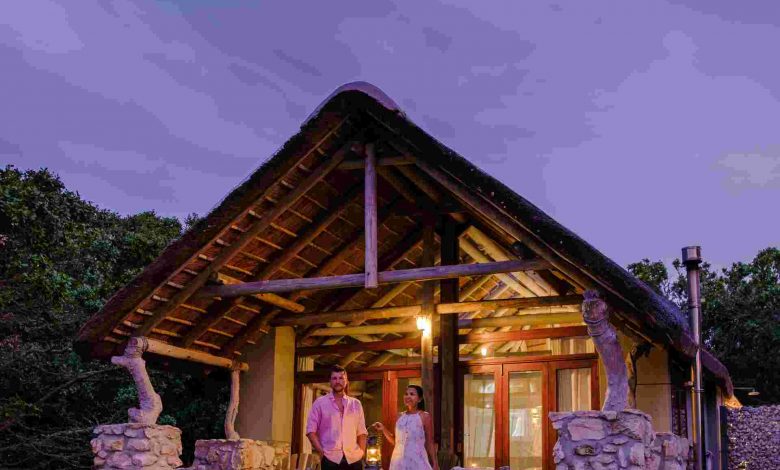
I've spent a fair amount of time on safari, and I still remember the exact moment I understood what separates a great lodge from an extraordinary one. I was sitting on the deck at Angama Mara, looking out over the Mara Triangle at 6 AM, a proper Kenyan coffee in hand, watching a cheetah pace through the grass maybe 300 meters away. No vehicle. No radio chatter. Just the view and the animal and the silence. The lodge had positioned my tent — calling it a tent is absurd, it's a 90-square-meter canvas suite with a freestanding bath — so every morning started with that exact view. That's design. And that's the difference between a lodge charging $1,850 per person per night and one at $189. Choosing the right luxury safari lodges in Africa isn't about thread count. It's about location, guide quality, how many vehicles share a sighting, and whether the operation feels curated or corporate.
This guide covers five properties that consistently deliver — Kenya, Tanzania, Botswana, South Africa. Real 2026 prices, real details, and the honest version of what you're getting. These aren't ranked — they're genuinely different experiences. Read all five before deciding anything.
Singita Grumeti, Tanzania — The Serengeti Without the Crowds
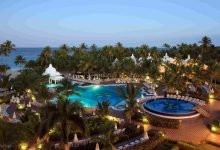
Most people going to the Serengeti don't know the western corridor exists, let alone that Singita operates a private concession there covering 350,000 acres. No other lodge touches this land. Singita Sasakwa Lodge sits on a hill overlooking the reserve — it looks more like a ridiculous colonial estate than a hotel. High ceilings, dark wood, a croquet lawn, a pool that has no business being that beautiful in the middle of Tanzania.
Pricing for 2026: $2,550 per person sharing in green season (January–May) up to $3,525 during peak July–September — fully inclusive. The Great Migration passes through this corridor June–August with the Grumeti River crossings. Green season delivers extraordinary birdlife and far fewer vehicles at sightings. I went in February once and had a pride of twelve lions entirely to ourselves for forty minutes. No contest.
andBeyond Ngorongoro Crater Lodge, Tanzania — Book It for 2027
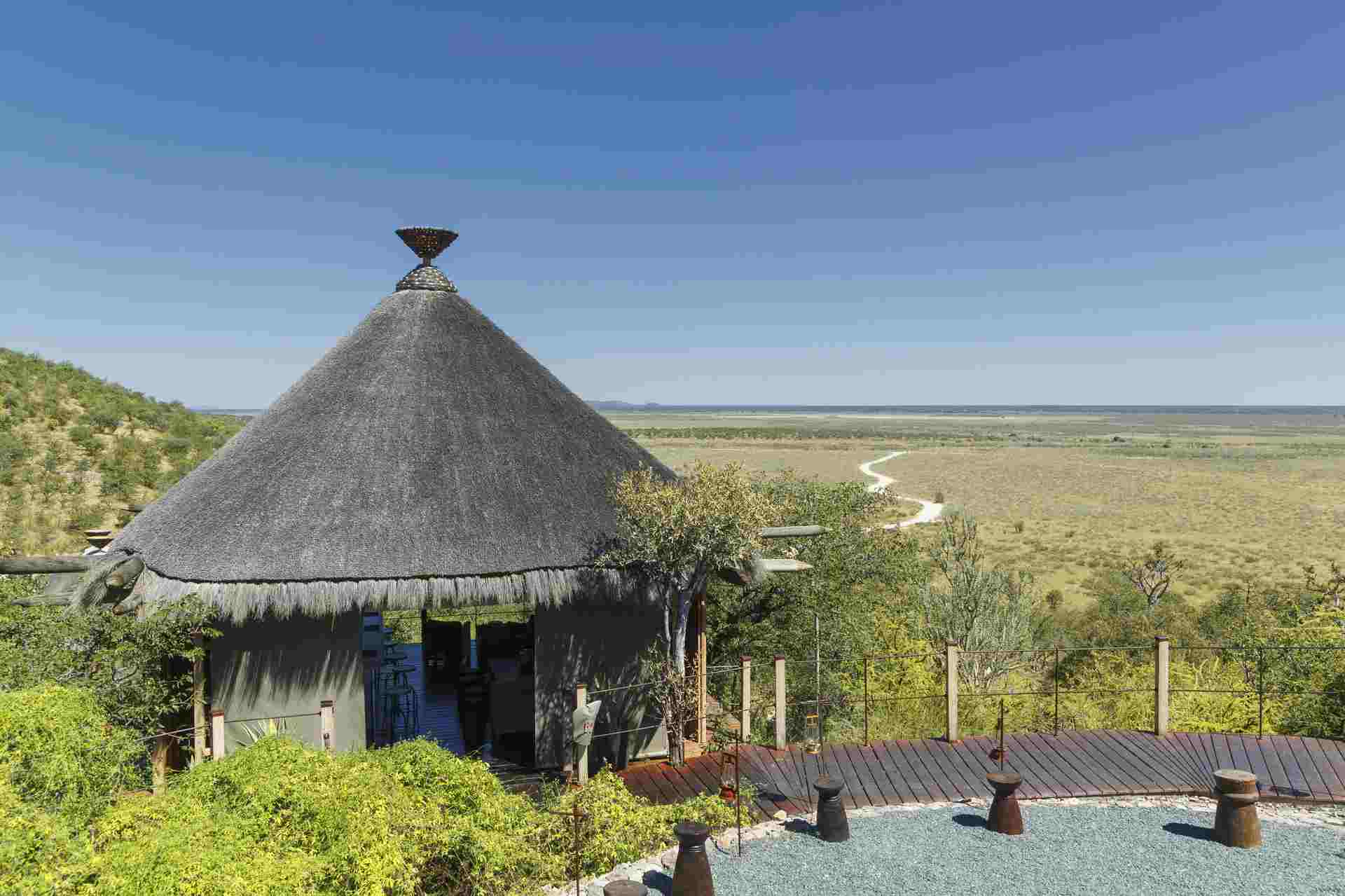
Fair warning: andBeyond Ngorongoro Crater Lodge is closed for a full rebuild and won't reopen until 2027. I'm including it because it matters for planning — if you were eyeing this for 2026, you need to know now. When it reopens, the lodge sits on the Ngorongoro Crater rim at 2,400 meters elevation, with caldera views that photographs genuinely can't communicate. Previous pricing started around $800 per person per night.
What made it famous: the Maasai-meets-Baroque interior design that somehow worked. Banana leaf chandeliers, Maasai beadwork, butler-drawn baths. The rebuild keeps the spirit, modernizes the structure. Book it for 2027 the moment availability opens — watch andBeyond's site directly. For 2026, their Baines' Camp in Botswana is a reasonable same-operator alternative.
Angama Mara, Kenya — Maasai Mara at Its Most Cinematic
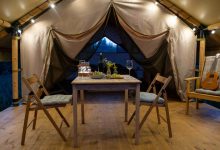
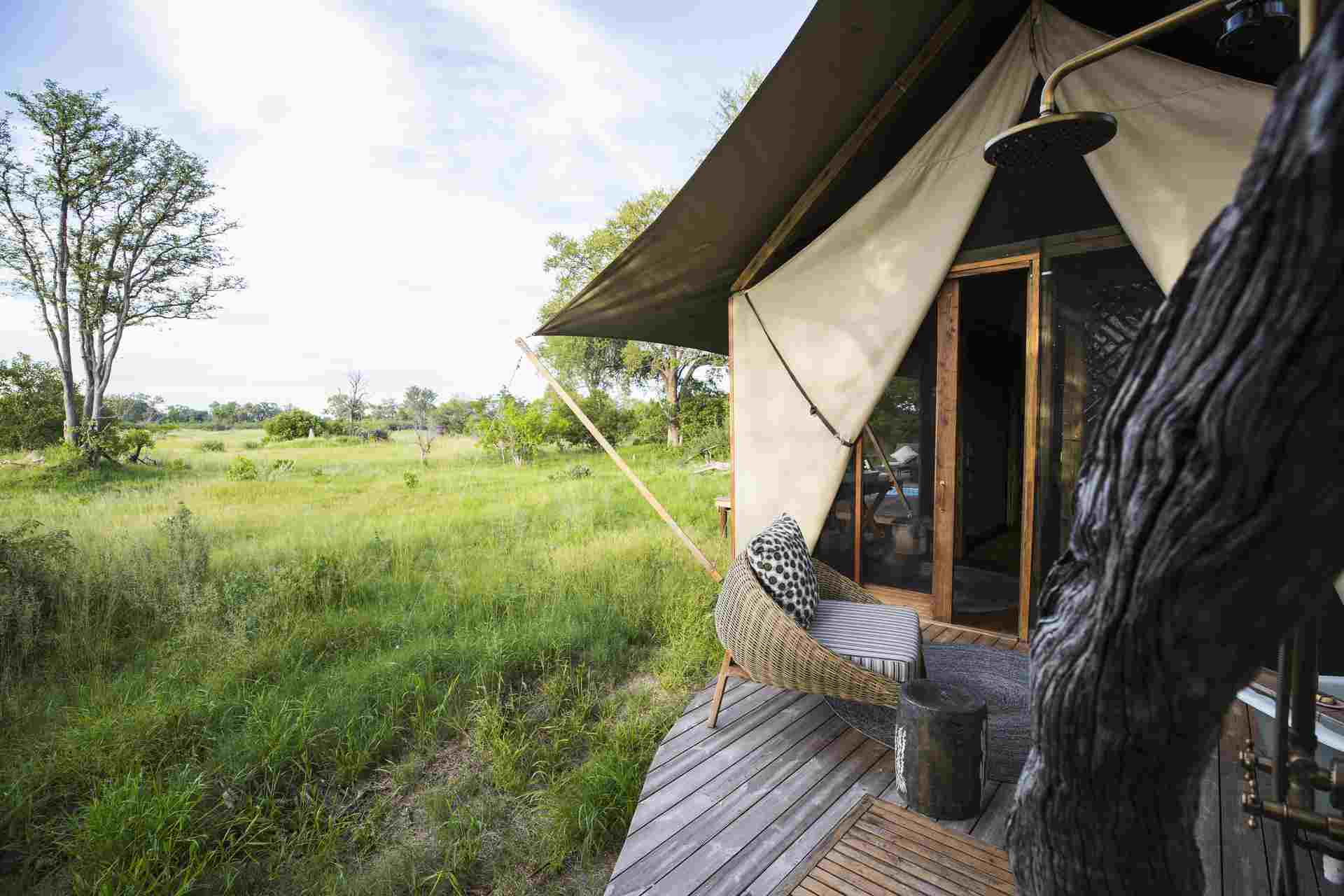
Angama means "suspended in mid-air" in Swahili, and the name is doing real work. The lodge sits 500 meters above the Mara Triangle on the Great Rift Valley escarpment — the same ridge where Out of Africa filmed in 1985. Two separate camps, North and South, each with 15 canvas-and-glass suites that open completely onto the valley. The photography program with their resident photographer Warren is worth asking about when you book; it's one of the better free inclusions of any luxury safari lodge in Africa.
For 2026: $1,850 per person sharing from January through June and October through December, rising to $2,750 during July–September peak. All meals, game drives, bush walks, and night drives included. November is criminally underrated — wildebeest calving starts, the light is golden all day, and rates drop back to the low season price. I'd go in November over July every time, honestly.
Zarafa Camp, Botswana — Okavango's Most Private Corner
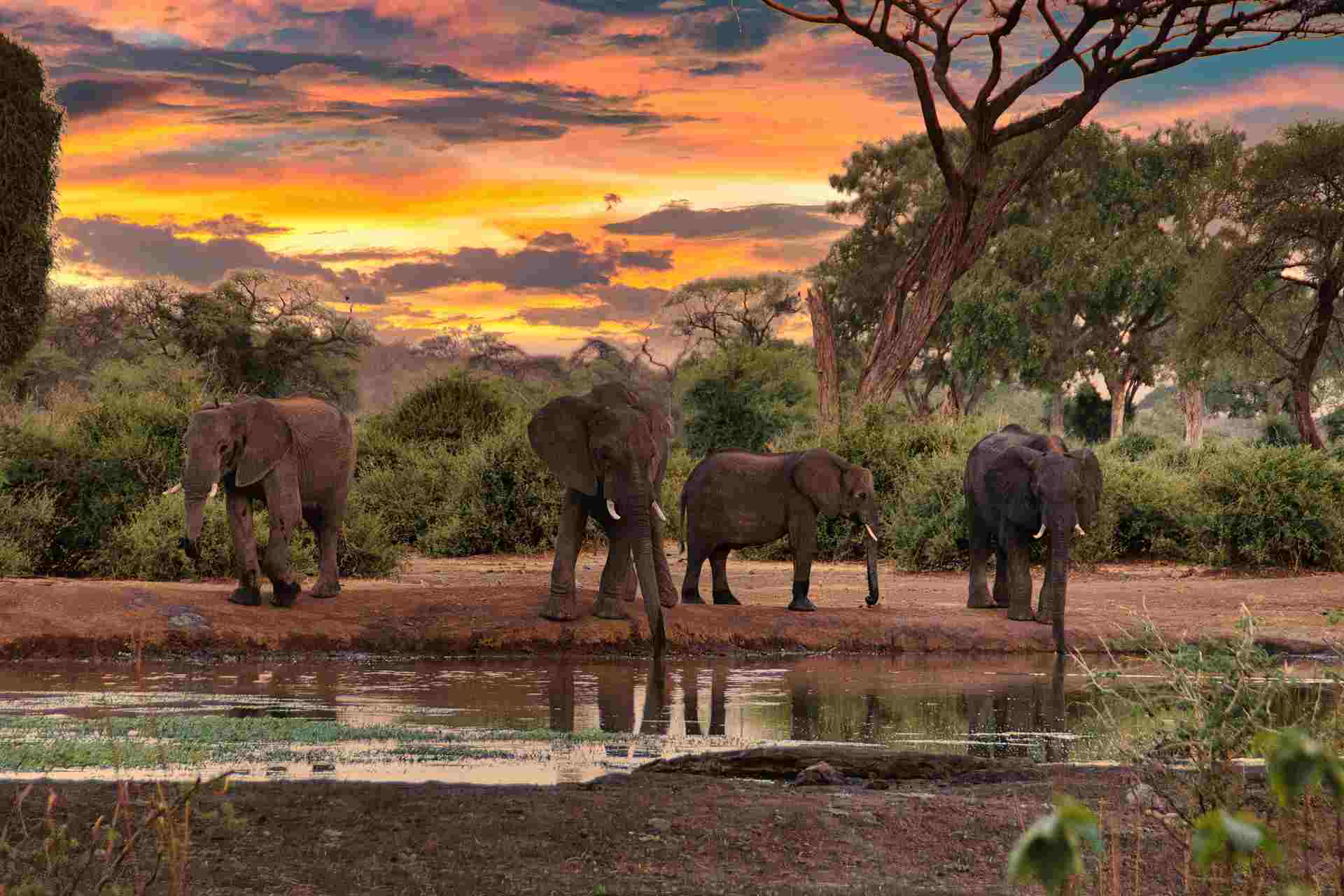
Zarafa sits in the Selinda Reserve in northern Botswana — a 320,000-acre private concession by Great Plains Conservation. Four tents. The entire camp takes a maximum of eight guests, which means you will not share a game drive or a meal with strangers unless you've brought them. That exclusivity is the point, and the pricing reflects it. 2026 rates run from $2,070 per person sharing in green season (January to March) up to $3,920 during peak (June 15 through September 30) — peak being when the Okavango floods and you explore by mokoro canoe.
The camp specializes in walking safaris. Your guide carries a rifle, you carry water and a camera, and you spend two hours moving at ground level through an ecosystem vehicles can't reach. I asked a guide there what his favorite part of guiding at Zarafa was and he said, without hesitation, the walks — because that's where guests actually learn to see. He was right. You notice elephant tracks, termite mounds being raided by aardvarks, the difference between a territorial and a relaxed lion's posture. Vehicles show you wildlife. Walks teach you to read it.
Londolozi South Africa — The Original Big Five Lodge
Londolozi has been operating in the Sabi Sand since 1926, which makes it older than most safari tourism as a concept. The Varty family invented the framework — wildlife photography plus conservation storytelling — that every premium lodge now copies. The Sabi Sand shares an unfenced border with Kruger National Park, so the Big Five move freely. Londolozi's leopard tracking is legendary; they've documented individual leopard family trees for over four decades. Worth the trip for that alone.
There are five camps at different price points. Varty Camp starts at $1,731 per person sharing per night for 2026. Founders Camp — smaller, more secluded — runs $2,169. Pioneer Camp, the most private, sits at $2,667. All fully inclusive. For first-time visitors, Varty Camp is the right call: the guiding is consistently excellent, and the Sand River location means morning drives often produce sightings within twenty minutes of leaving. The leopards are genuinely habituated to vehicles — you'll get within meters of an animal that would vanish instantly in an unfenced reserve.
How to Combine These Into One Safari
Two countries is the sweet spot for a two-week trip. Most popular right now: fly into Nairobi, four nights at Angama Mara during Migration (July or August), then cross into Tanzania for three nights at Singita Sasakwa. Seven nights runs roughly $25,000–$35,000 for two people fully inclusive, before international flights. South Africa pairs better with Botswana — three nights at Londolozi, charter to Maun, four nights at Zarafa. The Airlink charter from Johannesburg to Maun runs about $400 each way.
Don't cram three countries into two weeks. You'll spend more time in airports than in lodges, and the point of luxury safari is unhurried time in one place. Two countries. Done.
Do's and Don'ts for Luxury Safari Lodges in Africa
| Do's | Don'ts |
|---|---|
| Book peak season 12+ months out — Zarafa books August slots 24 months ahead | Don't assume all-inclusive covers premium spirits — check exactly what's included |
| Request a specific guide by name when you book | Don't bring red, orange, or white clothing — bright colors disturb wildlife |
| Bring your own binoculars — ones you know how to use are faster than lodge pairs | Don't book without reading recent guide-specific reviews on SafariBookings |
| Pack serious layers — open vehicles at 5:30 AM in Sabi Sand hit 5°C in July | Don't expect strong WiFi — most lodges deliberately cut it off after hours |
| Do a walking safari at least once — it changes how you watch all future game drives | Don't declare dietary restrictions the morning of a meal; give lodges 72+ hours |
| Tip guide ($20–$30 USD per guest per day) and tracker ($10–$15) separately in cash | Don't book two nights at any lodge — you need day three before things open up |
| Ask your guide to explain animal behavior, not just identify species | Don't assume cheapest room at a top lodge equals the full experience — the gap is real |
| Bring a dust-proof bag for your camera — dry-season roads are brutal on equipment | Don't schedule same-day transfers between lodges — you lose half a game drive each time |
| Stay minimum three nights at any property — day one is essentially orientation | Don't book Migration season expecting guaranteed crossings — timing is unpredictable |
| Start malaria medication conversation with your doctor 6–8 weeks before departure | Don't bring large hard-sided luggage — bush charters have strict 15–20kg soft-bag limits |
FAQs
What is the best time of year to visit luxury safari lodges in Africa?
Depends where you're going and what you want. For the Great Migration in Kenya and Tanzania, July through October is the classic window — river crossings at their most dramatic. South Africa's Sabi Sand peaks in dry winter months (June–September), when thinning vegetation forces animals toward water. Botswana's Okavango peaks July–August when the flood fills the channels. Green season (November–March) means lower prices, beautiful light, and far fewer vehicles at sightings. Not the wrong call at all, particularly for repeat visitors.
Are luxury safari lodges in Africa worth the price?
At the right property with the right guide? Yes. Zarafa or Singita isn't selling a hotel room — it's selling exclusive access to private land no public visitor touches, with guides who know individual animals by name after decades in one ecosystem. The rate also covers all food, drinks, and daily game activities that would cost $400–$600 separately at mid-range lodges. Where people feel stung is when they book mediocre guides, or expect the price to guarantee sightings. Wildlife doesn't read invoices.
What does fully inclusive mean at an African safari lodge?
At Angama Mara, Londolozi, Zarafa, and Singita: accommodation, three meals daily, house wines and local spirits, game drives, and standard activities. Premium spirits and champagne are often extras. Spa treatments and flying safaris are usually additional. Conservation and park fees can add $50–$120 per person per day on top — always ask specifically what's excluded before confirming your booking.
How far in advance do I need to book?
For peak season at top luxury safari lodges in Africa, 12–18 months is standard. Zarafa — four tents total — books August slots 24 months out. Shoulder season gives more flexibility; six months is usually fine. Last-minute cancellation releases happen but relying on them for a trip at this price is a genuine gamble. Book early, request your preferred guide by name.
Do I need malaria medication for these lodges?
Yes. Kenya, Tanzania, Botswana, and South Africa's Sabi Sand are all malaria-endemic. Most travel physicians recommend Malarone or doxycycline — begin that conversation 6–8 weeks before departure so you have time to start the course. Yellow fever vaccination may be required depending on transit countries. Check current CDC guidance for each destination specifically; requirements shift year to year.
What should I pack for a luxury African safari?
Neutral colors — khaki, olive, tan — in lightweight layers. Temperatures swing: 35°C at noon, 8°C on a 5:30 AM open vehicle. A down vest and fleece are non-negotiable in dry season. Good trail runners for walking safaris. A camera with 400mm equivalent reach if photography matters — lodges provide binoculars, not lenses. A dust-proof camera bag. Most lodges do laundry daily, so four days of clothing handles a ten-day trip fine.
Can children stay at these luxury safari lodges?
Policies vary. Londolozi is genuinely child-friendly — their Cub Club has specialist kids' guides and age-appropriate activities. Angama Mara accepts all ages with family suite configurations. Singita Grumeti and Zarafa both have minimum age requirements (typically 6–10 years) on walking safaris specifically. Always confirm each property's policy directly — some private camps set minimums of 12 for safety on certain activities.